Automated Dropshipping Website in Bangladesh
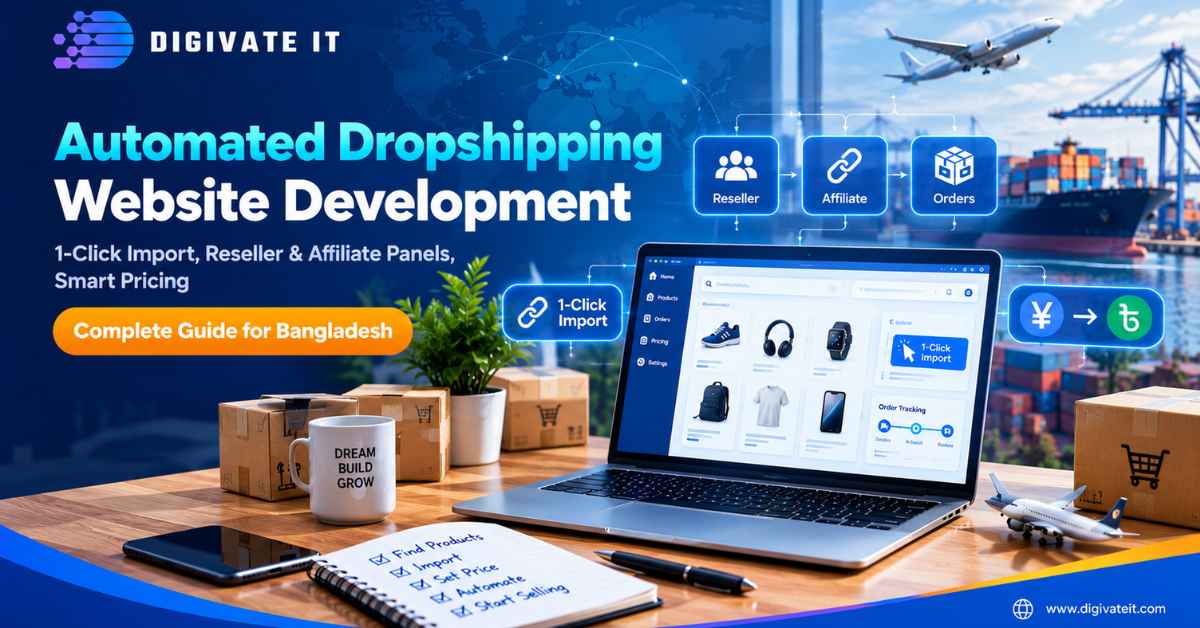
Automated Dropshipping Website Development in Bangladesh: A Complete Guide
Dropshipping sounds easy. List a product. Get an order. Let the supplier ship it.
Then reality hits.
You copy 300 products by hand. A price changes overnight. A supplier runs out of stock. A customer asks, "Where is my parcel?"
Automation fixes most of this. The right platform imports products, updates prices, tracks orders and pays commissions for you.
This guide explains automated dropshipping website development in Bangladesh. You will learn the features, models, costs and risks. We wrote it for founders, agencies and sourcing businesses.
What Is an Automated Dropshipping Website?
Dropshipping means you sell products you do not stock. When a customer orders, you buy from a supplier. The supplier ships the item.
An automated dropshipping website handles the repeat work. Software imports products. It converts prices. It tracks parcels. It reports profit.
Manual vs Automated Dropshipping
| Task | Manual way | Automated way |
| Adding products | Copy and paste | One-click import |
| Price updates | Check by hand | Scheduled sync |
| Currency math | Calculator | Live CNY to BDT rules |
| Order placement | Message supplier | Order queue and status flow |
| Tracking | Send updates by chat | Customer tracking page |
| Reseller payouts | Spreadsheet | Wallet and commission reports |
Manual work caps your growth. Automation lifts that cap.
Why Dropshipping From China Appeals to Bangladeshi Sellers
Chinese wholesale platforms offer huge catalogs at factory prices. You can test products without buying stock. That lowers your starting risk.
The Main Benefits
- Low upfront cost. No warehouse needed at the start.
- Wide product choice. Test many niches fast.
- Better margins. Source close to the factory.
- Flexible scale. Add products and resellers over time.
The Honest Challenges
Dropshipping is not magic. Plan for these issues.
- Longer delivery times from China
- Quality differences between suppliers
- Returns and refunds that cost money
- Customs and tax rules
- Price swings from exchange rates
A good platform helps you manage each one. It cannot remove them.
How China Dropshipping Works in Bangladesh
Here is the typical flow. Your platform sits in the middle.
- Import: Products load from a supplier source.
- Price: The system converts and adds your margin.
- Sell: A customer or reseller places an order.
- Buy: You or your system orders from the supplier.
- Ship: The parcel moves to your forwarder, then to Bangladesh.
- Deliver: A local courier completes the last mile.
- Track: The customer sees every status update.
Each step can be automated, fully or in part.
Which Dropshipping Model Should You Build?
Pick your model before you pick features.
Model 1: Direct-to-Customer Store
You sell to end customers. You take orders and fulfil through suppliers. This suits brands and niche stores.
Model 2: Reseller Platform
Resellers sign up on your site. They sell your catalog to their own customers. You ship to those customers.
Model 3: Affiliate-Driven Store
Affiliates promote your products. They earn commission on each sale. You pay only when sales happen.
Model 4: Hybrid Platform
You combine direct sales, resellers and affiliates. This suits larger operations.
| Model | Best for | Complexity |
| Direct store | New sellers | Low |
| Reseller platform | Wholesale-minded teams | Medium |
| Affiliate store | Marketing-led teams | Medium |
| Hybrid | Scaling businesses | High |
Tip: Start with one model. Add the others when orders grow.
Must-Have Features of an Automated Dropshipping Platform
A strong platform covers the whole workflow. Here are the features that matter most.
1. Automated Product Import
This is the heart of an automated product import dropshipping website. It saves hours every week.
- One-click import with images, videos and variants
- Auto translation from Chinese to English or Bangla
- Variant mapping for size, color and model
- Duplicate checks to avoid repeat listings
- Bulk import by category or keyword
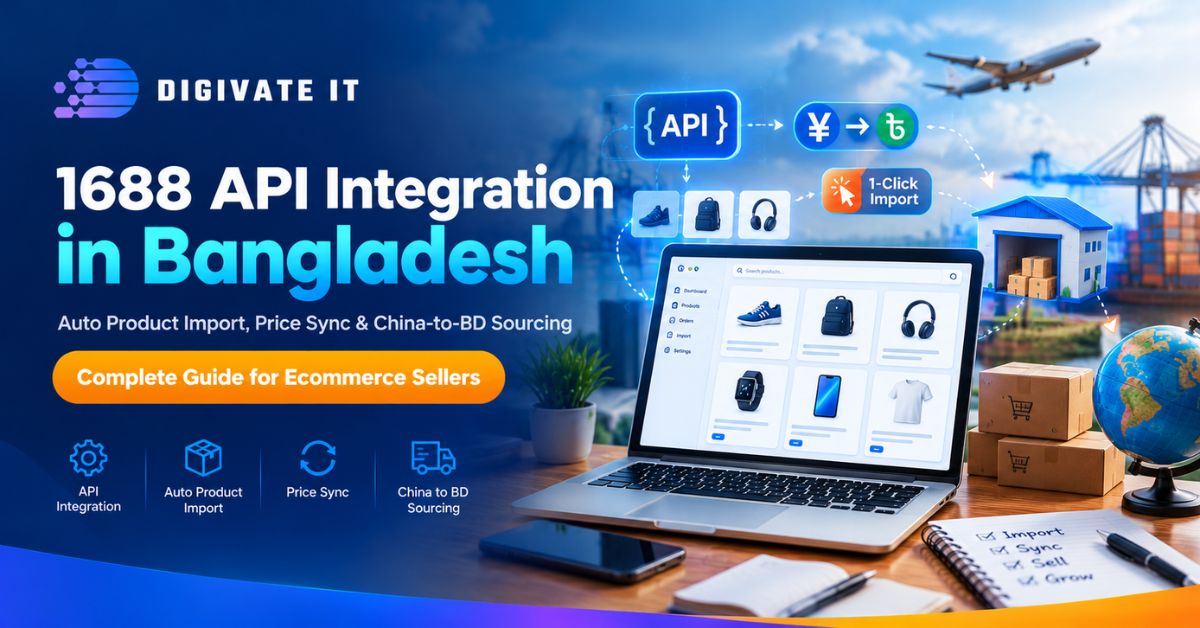
Our guide to 1688 API integration service in Bangladesh explains the data side in detail.
2. Image Search for Discovery
Many buyers have a photo, not a Chinese keyword. Reverse image search lets them upload a photo. The system finds matching factory products.
3. Smart Pricing Engine
Bad pricing kills profit. Automate it.
- Live CNY to BDT conversion
- Global and per-product margins by percentage or fixed amount
- Freight rules by KG or CBM
- Tax and customs buffers
- Reseller price tiers
4. Stock and Price Sync
Suppliers change prices and stock. Your site must keep up.
- Scheduled updates
- Alerts for large price jumps
- Auto-hide of unavailable items
5. Order Management
Keep every order clear.
- Clear statuses from payment to delivery
- Supplier order notes
- Invoices and receipts
- Local payment gateway support
For payment rules, check Bangladesh Bank.
6. Reseller Panel
Give resellers their own control center.
- Registration and approval
- Bulk order forms
- Wallet balance and payout requests
- Order history and reports
This is the core of custom dropshipping and reseller platform development.
7. Affiliate Panel
Want to build a dropshipping website with an affiliate panel? Include these basics.
- Unique referral links and codes
- Click and sale tracking
- Commission rules by product or category
- Payout reports
- Fraud checks for fake orders
8. Cargo and Shipment Tracking
Tracking cuts support load. It also builds trust.
- Status from China warehouse to Bangladesh
- Air and sea freight views
- Tracking timeline for customers
- Email and SMS alerts
9. Admin Dashboard
Your team needs full control.
- Role-based access
- Sales and profit reports
- Email templates
- Reseller and affiliate management
- Sourcing RFQ (Request for Quotation) tools
10. Built-In SEO
Hundreds of products need automatic SEO.
- Auto meta titles and descriptions
- Clean URLs
- Product structured data
- XML sitemaps
See Google's product structured data guide.
Feature Priority: What to Launch First
| Feature | Phase | Reason |
| Product import | 1 | Core value |
| Pricing engine | 1 | Protects margin |
| Checkout and orders | 1 | Revenue |
| Stock and price sync | 1 or 2 | Prevents bad orders |
| Shipment tracking | 2 | Trust and support |
| Reseller panel | 2 | Growth channel |
| Image search | 2 | Better discovery |
| Affiliate panel | 3 | Referral growth |
1688 Dropshipping: What Developers Should Know
Many sellers search for a 1688 dropshipping website developer in BD. 1688.com is a major Chinese wholesale marketplace. Prices are often lower than on export platforms.
But there are things to plan for.
- Data access: Official and third-party routes both exist.
- Language: Listings are in Chinese.
- Shipping: Items usually ship to a forwarder first.
- Supplier quality: Vet suppliers before you promote items.
Read our breakdown of official vs third-party 1688 access before you choose.
Script or Custom Build?
Many people look for an automated China dropshipping platform script. A script is a ready-made code package. It can be a fast start. It also has limits.
| Factor | Ready-made script | Custom build |
| Upfront cost | Lower | Higher |
| Launch speed | Fast | Medium |
| Custom workflows | Limited | Full freedom |
| Brand uniqueness | Low | High |
| Scaling | Harder | Easier |
| Code control | Vendor-dependent | Defined by your contract |
When a Script Makes Sense
- You are testing an idea
- Your budget is small
- Your workflow is standard
When Custom Development Wins
- You need reseller and affiliate logic
- You want unique pricing rules
- You plan to scale
- You need special courier or payment setups
A smart path: Test with a script. Move to custom when orders grow. Or build custom from day one if your process is unique.
How to Build an Automated Dropshipping Website: Step by Step
Here is our process.
Step 1: Define Your Model and Niche
Answer these questions first.
- Who is your customer?
- Which products will you sell?
- Will you use resellers or affiliates?
- Which supplier sources will you use?
Step 2: Map the Workflow
Draw every step from product search to delivery. Include who acts at each point. Include what happens when something fails.
Step 3: Choose the Data Source
Decide how products will enter your platform. Options include official APIs, authorized data vendors, or manual catalogs. Each has trade-offs.
Step 4: Design for Mobile First
Most Bangladeshi shoppers use phones. Design for small screens first.
- Fast product pages
- Simple filters
- Easy checkout
- Clear delivery time notes
Use Google's Core Web Vitals guidance to check speed.
Step 5: Build the Core Platform
Our team builds the storefront, admin panel and pricing engine. We connect product import and order flows.
Step 6: Add Reseller and Affiliate Panels
We build registration, approval and wallet tools. We add referral tracking and commission rules.
Step 7: Integrate Third Parties
Typical integrations include:
- Payment gateways
- Courier services
- SMS and email tools
- Translation tools
- Supplier data sources
Step 8: Test With Real Scenarios
- Import 50 products
- Place a test order
- Test a reseller order
- Test an affiliate sale
- Test failed payments and refunds
Step 9: Launch and Train
We launch in stages. We train your team. We share simple guides.
Step 10: Monitor and Improve
Supplier data and exchange rates change. We monitor syncs. We fix issues. We improve features with real feedback.
Typical Development Timeline
| Phase | What happens | Estimated time |
| Discovery | Goals, workflow, scope | [1 week] |
| Design | Wireframes and UI | [1–2 weeks] |
| Core build | Store, admin, pricing | [4–8 weeks] |
| Panels | Reseller and affiliate tools | [2–4 weeks] |
| Integrations | APIs, payments, couriers | [2–4 weeks] |
| Testing | QA and fixes | [1–2 weeks] |
| Launch | Go-live and training | [1 week] |
How Much Does It Cost?
Cost depends on scope. We quote website design and API integration separately. That keeps pricing fair.
| Cost item | What is included |
| Website design and development | Storefront, accounts, checkout, admin panel |
| API and data integration | Product import, image search, price sync |
| Reseller panel | Registration, bulk orders, wallet |
| Affiliate panel | Referral links, tracking, payouts |
| Tracking module | Cargo and shipment status |
| Hosting and security | Server, SSL, backups |
| Ongoing support | Monitoring, updates, fixes |
What Changes the Price?
- Number of modules
- Design depth
- Data source type
- Languages and currencies
- Number of integrations
- Training needs
Tip: Always ask for a written scope. Vague quotes cause surprise bills.
Legal and Compliance Basics in Bangladesh
A website does not replace legal checks. Review these early.
- Trade and import rules: See the National Board of Revenue (NBR).
- Foreign payments: Follow Bangladesh Bank guidance.
- Product standards: Some items need approvals. See BSTI.
- Ecommerce rules: Check the Ministry of Commerce for digital commerce guidelines at commerce.gov.bd.
- Clear policies: Publish delivery, return and refund terms.
- Affiliate disclosure: Tell customers when links earn commission.
Rules change. Confirm with a qualified advisor. This article is not legal advice.
Security and Performance Best Practices
Protect your data. Protect your customers.
- Use HTTPS everywhere
- Keep API keys on the server
- Limit admin roles
- Back up daily
- Log key actions
- Cache product pages
- Watch for fake affiliate orders
For more, see the OWASP Top 10.
Common Mistakes to Avoid
We see these again and again.
Mistake 1: Ignoring Delivery Time
China shipping takes time. Show realistic delivery estimates. Surprises cause refunds and bad reviews.
Mistake 2: Setting Prices From Supplier Cost Only
Supplier cost is not your cost. Add freight, customs, payment fees and returns. Then set your margin.
Mistake 3: Skipping Supplier Vetting
Automation can import bad products fast. Review suppliers and key products first.
Mistake 4: Launching Every Feature at Once
Big launches delay revenue. Start with core features. Add panels as you grow.
Mistake 5: Weak Fraud Controls
Affiliate and reseller programs attract abuse. Add order checks and approval rules.
Mistake 6: No Maintenance Plan
APIs and rates change. Plan monitoring from day one.
Marketing Your Dropshipping Website
A platform needs traffic. Plan this early.
- Create helpful content. Write buying guides and product comparisons.
- Use SEO. Clean structure and structured data help.
- Run social campaigns. Facebook and Instagram suit many niches.
- Recruit affiliates. Pay for results only.
- Support resellers. Share photos, descriptions and training.
- Collect reviews. Real reviews build trust.
Google's people-first content guidance is a useful checklist.
Why Choose Digivate IT?
Picking a developer is a trust decision. Here is what we offer.
- Dropshipping-focused builds. We understand import, margin and reseller flows.
- Ready modules. One-click import, image search, reseller and affiliate panels, and shipment tracking.
- Clear pricing. Design and API costs are quoted separately.
- Local insight. BDT, local payments and Bangladeshi buyer habits.
- Ongoing care. Monitoring, updates and support.
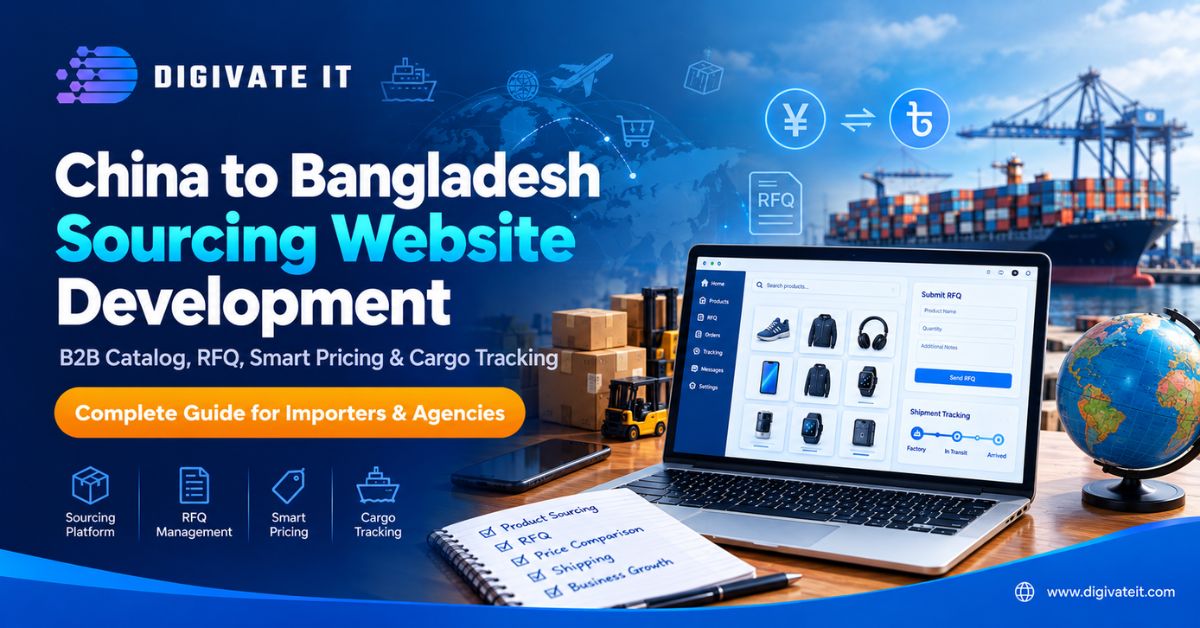
Explore more: our guide to a China to Bangladesh sourcing website, ecommerce development , custom software development and contact us .
How to Choose a Dropshipping Website Developer
Ask every agency these questions.
- Have you built a dropshipping or reseller platform?
- Can I see a live demo?
- How do you handle pricing and currency rules?
- How do you build affiliate tracking and fraud checks?
- Who owns the source code?
- Which APIs and couriers can you connect?
- What support do you offer after launch?
Vague answers are a red flag.
Is Your Business Ready? Quick Self-Check
Tick what applies:
- You add products by hand
- You update prices manually
- Customers ask for tracking often
- You want resellers or affiliates
- You plan to grow in the next year
Three or more ticks? Automation will likely pay off.
Final Takeaways
- Choose your model first. Direct, reseller, affiliate or hybrid.
- Launch core features. Import, pricing, orders and sync.
- Add growth tools next. Reseller and affiliate panels.
- Price for landed cost. Include freight, tax and returns.
- Set honest delivery times. Trust beats speed claims.
- Plan maintenance. Automation still needs care.
Ready to Build Your Automated Dropshipping Platform?
Stop copying products by hand. Let your platform do the repeat work.
Digivate IT can scope your project, choose the right model and build a platform that grows with you.
Frequently Asked Questions (FAQ)
Find clear, expert answers to the most common questions regarding this article below.
Dropshipping is a business model, not a banned activity. You must still follow trade, tax and payment rules. Check current rules with the NBR, Bangladesh Bank and a qualified advisor.
A basic store can take a few weeks. A full platform with reseller and affiliate panels takes longer. Scope and approvals drive the timeline.
Yes, through official or authorized data routes. The system can import images, variants and details. It can then apply your pricing rules.
Yes. The system reads the CNY price and applies a current exchange rate. It then adds freight, costs and your margin to show a BDT price.
A reseller buys from you and sells to their own customers. An affiliate promotes your products and earns commission. Many platforms support both.
Yes. The platform can store status updates from logistics partners. Customers see a timeline from the China warehouse to delivery.
It can work for testing. Scripts often limit custom workflows. Growing businesses usually move to custom builds.
Use approval rules and order checks. Review unusual patterns. Pay commission only after delivery or after a safe waiting period.
Yes. Many clients launch with import, pricing and orders first. They add panels, tracking and image search as sales grow.
You can retain Digivate IT for monitoring and updates. Ongoing care keeps syncs healthy when data sources change.
Need Help with Software or Automation?
Talk to our technical experts today on WhatsApp for instant guidance.