1688 API Integration Service in Bangladesh
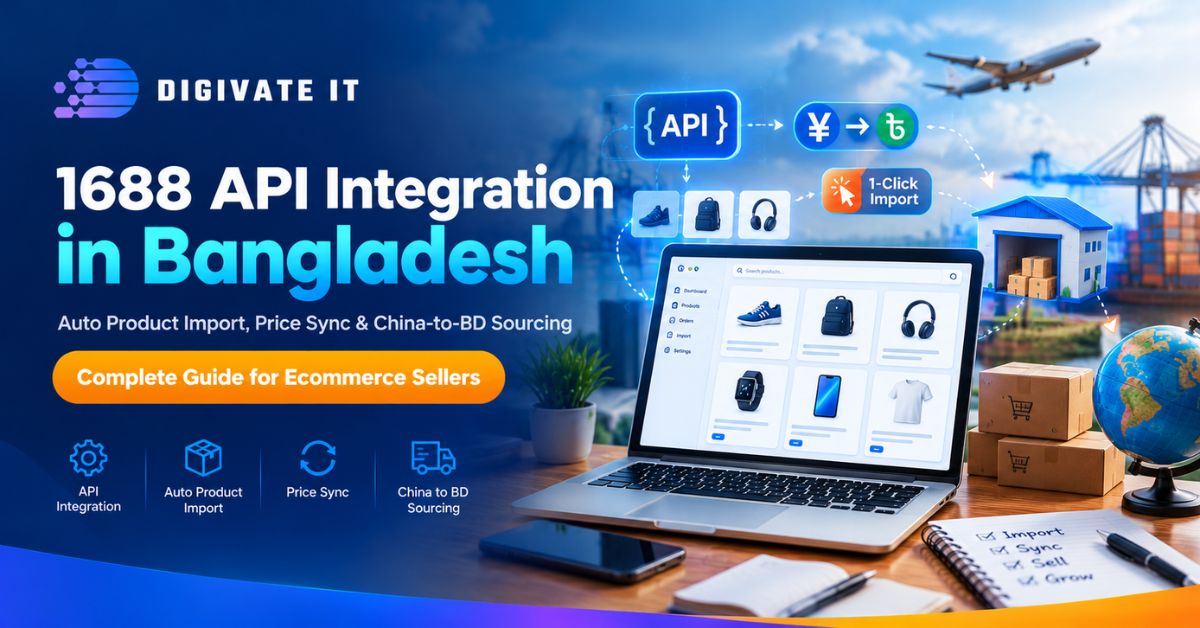
1688 API Integration Service in Bangladesh: The Complete Guide for Ecommerce Sellers
You find a great product on 1688. The price is 60% lower than elsewhere. You copy the details by hand. You convert the yuan price. You paste it into your store.
Then you repeat that 200 more times.
Sound familiar? Manual 1688 sourcing does not scale. Prices change. Stock runs out. Titles stay in Chinese. Orders pile up.
A 1688 API integration fixes this. It connects your store to 1688 data and automates the boring work.
This guide explains how it works. You will learn the steps, the costs, the risks and the best setup for Bangladeshi sellers. We wrote it for store owners, agency leads and developers.
What Is 1688 and Why Do Bangladeshi Sellers Care?
1688.com is Alibaba Group's domestic wholesale marketplace in China. Factories and suppliers sell directly there. Prices are often lower than on Alibaba.com because buyers are mostly Chinese businesses.
For Bangladeshi sellers, that means factory-direct pricing. It also means more product choice. Many items never appear on export platforms.
Why Bangladesh Is a Strong Market for 1688 Sourcing
Bangladesh imports a large share of its consumer goods from China. Local ecommerce keeps growing. Facebook shops, Daraz sellers and standalone stores all need cheap, steady supply.
Here is what sellers usually want:
- Lower unit costs than local wholesalers
- Wider catalogues without holding stock
- Faster listing of new products
- Fewer pricing mistakes
An API helps with all four.
What Is the 1688 API?
An API (application programming interface) lets two systems talk. Your website asks a question. 1688 sends back data.
The 1688 Open Platform is the official developer portal. You can read it at open.1688.com. It offers interfaces for products, orders, logistics and more.
What You Can Do With It
| Task | What the API helps you do | Business benefit |
| Product data | Pull titles, images, SKUs and attributes | Faster catalogue building |
| Price data | Read tier prices and ranges | Accurate margins |
| Stock data | Check availability | Fewer cancelled orders |
| Search | Find items by keyword or image | Better product discovery |
| Orders | Place and track purchase orders | Less manual work |
| Logistics | Read shipping status | Clear customer updates |
Note: Available interfaces depend on your account type and approval. Always check the current documentation on the official portal.
1688 Official API vs Third-Party API: Which Should You Choose?
This is the question most Bangladeshi teams ask first. The honest answer is: it depends.
Option 1: Official 1688 Open Platform API
The official route gives you the most direct access. It also has the strictest rules.
Pros:
- Direct data from the source
- Strong long-term stability
- No middleman fees on data
Cons:
- Account approval can be slow
- Documentation is mostly in Chinese
- Some interfaces need a verified business identity
- Some features are limited for overseas users
That is why 1688 official API integration in BD needs planning. Many teams get stuck at the approval stage. We help with that step.
Option 2: Authorized Third-Party Data Providers
Several vendors resell 1688 product data through their own APIs. They handle translation and access.
Pros:
- Faster start
- English documentation
- Simple pricing plans
Cons:
- Monthly fees
- Dependence on the vendor
- Possible data delays
Option 3: Hybrid Setup
Many growing stores combine both. They use a vendor for search and import. They use official access for orders when approved.
Quick Comparison
| Factor | Official API | Third-party API | Hybrid |
| Setup speed | Slow | Fast | Medium |
| Data freshness | Best | Good | Very good |
| Running cost | Lower | Higher | Medium |
| Approval hurdles | High | Low | Medium |
| Best for | Large, stable stores | Startups, quick tests | Scaling brands |
Our advice: Start with the fastest safe option. Validate demand. Then upgrade.
How to Integrate 1688 API Into an Ecommerce Website
Wondering how to integrate 1688 API into an ecommerce website? Here is the process we follow. Adjust it to your platform.
Step 1: Define Your Business Goal
Decide what you need first. Do not build everything at once.
Common goals:
- Import products into your store
- Keep price and stock in sync
- Automate purchase orders
- Track shipments
Pick one. Ship it. Then add more.
Step 2: Choose Your Access Method
Pick official, third-party or hybrid. Use the table above.
Also check your legal setup. Review import rules from the National Board of Revenue (NBR) and foreign exchange guidance from Bangladesh Bank. Rules change, so confirm current requirements.
Step 3: Register and Get Credentials
On the official platform, you typically create a developer account. You then register an app. You receive an App Key and an App Secret.
Keep both private. Never place them in front-end code. Store them in server environment variables.
Step 4: Handle Authorization
Most interfaces use OAuth 2.0. In simple terms, the seller grants your app permission. You then receive an access token.
Tokens expire. Build an automatic refresh. This is a common failure point.
Step 5: Sign Every Request
The platform checks that requests are genuine. It uses a signature, which is a code built from your parameters and secret.
If the signature is wrong, the call fails. Test this early.
Step 6: Build the Product Importer
This is the heart of 1688 product importer API setup. A good importer does five things:
- Fetches product details by item ID or URL
- Translates titles and descriptions into English or Bangla
- Maps attributes and variants to your store fields
- Converts CNY prices to BDT
- Applies your margin rules
Then it saves the item as draft or live.
Step 7: Add Price and Stock Sync
This is where automated 1688 product sync earns its value. Run a scheduled job. Compare new data with stored data. Update only what changed.
Tips from real projects:
- Use a queue, not one giant loop
- Respect rate limits
- Log every change
- Alert on large price jumps
Step 8: Connect Orders and Logistics
When a customer orders, your system can create a purchase order on 1688. It can then track the parcel to your forwarder.
Step 9: Test Before You Launch
Test with 20 products first. Check:
- Image quality
- Variant mapping
- Currency rounding
- Out-of-stock behavior
- Failed API calls
Step 10: Monitor and Improve
Set dashboards. Track sync errors. Review weekly. APIs change, so maintenance matters.
Platform-Specific Integration Notes
Each store platform needs a slightly different build.
WooCommerce (WordPress)
Use a custom plugin or a middleware service. Map products to WooCommerce custom fields. Use WP-Cron or a server cron for sync.
Shopify
Build a custom app. Use Shopify's Admin API for product writes. Watch API limits closely.
Custom Laravel, Node or Django Stores
This is often the cleanest path. You control the database. You can build queues and workers freely.
Multi-Vendor or Marketplace Sites
Add a sourcing layer. Let admins approve imported items. Keep supplier data separate from vendor data.
Core Features of a Good 1688 Integration
Not all integrations are equal. Look for these features.
Smart Product Import
- Bulk import by link or ID
- Keyword search inside your admin panel
- Duplicate detection
Auto Translation and Cleanup
- Chinese to English or Bangla
- Removal of banned words
- Brand and trademark filters
Dynamic Pricing Engine
- Live CNY to BDT rates
- Rules for shipping and customs
- Margin by category
Inventory Protection
- Auto-hide out-of-stock items
- Low-stock alerts
- Supplier risk flags
Order Automation
- One-click purchase orders
- Status tracking
- Customer notifications
See It Working: Digivate IT's 1688 Sourcing Platform
Seeing is believing. We built a ready platform that fetches products from 1688.com into your store. It works with one click.
It suits dropshipping brands, wholesale sourcing agencies and retail ecommerce stores. It removes manual data entry from your China-to-BD import flow.
Core Features at a Glance
| Feature | What it does for you |
| 1-click product import | Fetches details, images, videos, variants and descriptions through the 1688 API |
| AI reverse image search | Customers upload a photo and find matching factory products |
| Live price conversion | Converts CNY to BDT or USD at current exchange rates |
| Smart profit margins | Sets global or per-product margins, by percentage or fixed amount |
| Freight costing | Adds air cargo or sea freight cost per KG or CBM |
| Dropshipping panel | Registers resellers and handles bulk orders |
| Affiliate tracking | Tracks commissions automatically |
| Shipment tracking | Shows parcel status from China warehouse to doorstep |
| Automated SEO | Creates meta tags, structured data and clean URLs for every imported product |
| Admin dashboard | Role-based access, email alerts, sales reports and RFQ management |
How the Flow Works
- You connect the 1688 API to your store.
- A customer searches by keyword or uploads a photo.
- The platform matches the image with 1688 suppliers.
- Product images and all details load automatically.
- Your price, margin and freight rules apply instantly.
- The customer orders and tracks the shipment.
The result: no copy-paste work, and a store that stays current.
What Does 1688 API Integration Cost in Bangladesh?
Website design and API integration are priced separately. That keeps your quote fair. You pay for the store you need and the automation you want.
Once we connect the API, product data flows in. Images, details and image-search matching come from 1688 automatically. You do not enter them by hand.
| Cost item | What is included | Typical timeline |
| Website design (separate quote) | Storefront design, checkout, customer pages, admin panel | [2–6 weeks] |
| 1688 API integration (separate quote) | 1-click import, full product details and images, keyword and image search matching, CNY to BDT pricing | [3–6 weeks] |
| Advanced modules (optional) | Dropshipping panel, affiliate tracking, cargo and shipment tracking, RFQ management | [Depends on scope] |
| Ongoing support | Monitoring, API updates and fixes | Monthly |
Factors that change the price:
- Official vs third-party access
- Number of products
- Platform complexity
- Languages needed
- Order automation depth
Also budget for data vendor fees, servers and translation services.
Common Mistakes (and How to Avoid Them)
We see the same errors again and again.
Mistake 1: Ignoring Rate Limits
Too many calls get you blocked. Use queues and caching.
Mistake 2: Trusting Raw Supplier Data
Supplier titles can be misleading. Add review rules. Check images for logos.
Mistake 3: Forgetting Total Landed Cost
The 1688 price is not your cost. Add shipping, customs, VAT and payment fees. Then set your price.
Mistake 4: No Fallback Plan
APIs fail sometimes. Build retries and clear error logs.
Mistake 5: Skipping Compliance
Some products are restricted or need approvals. Check rules before listing. See NBR and the Bangladesh Standards and Testing Institution (BSTI) for product standards.
Security and Data Best Practices
Protect your system. Protect your customers.
- Store secrets in environment variables
- Use HTTPS everywhere
- Rotate tokens on a schedule
- Limit admin access
- Back up your product database
- Log all API activity
For general guidance, review the OWASP API Security Project.
Why Choose Digivate IT as Your 1688 API Development Company in BD?
Picking a 1688 API development company in BD is a trust decision. Ask hard questions. Here is what you should expect from any partner.
What We Bring
- Ecommerce focus. We build stores, not just scripts. See our ecommerce development services .
- Clear scoping. You get a written plan before work begins.
- Local support. We understand BDT, local couriers and local payments.
- Maintenance. We monitor syncs and update code when APIs change.
- Transparent reporting. You see logs, not guesses.
Explore more: custom software development, API integration services , and contact our team .
How to Choose a Developer: A Quick Checklist
Hiring an automated 1688 product sync developer? Ask these questions:
- Have you built a 1688 integration before?
- Can you show a live example?
- How do you handle token refresh?
- How do you prevent rate-limit blocks?
- Who owns the code after delivery?
- What happens when the API changes?
- Do you provide support after launch?
Vague answers are a red flag.
Is Your Store Ready? A Self-Check
Tick what applies to you:
- You list more than 50 products per month
- You update prices by hand
- You lose sales to stock errors
- You spend hours on copy and paste
- You plan to scale in the next year
Three or more ticks? Automation will likely pay off.
Final Takeaways
Here is the short version:
- 1688 gives factory-level pricing. Automation makes it practical.
- Official access is powerful but slow to set up. Third-party data is faster.
- A hybrid path suits many growing stores.
- Start small. Import, then sync, then order automation.
- Count landed cost, not just the 1688 price.
- Plan maintenance. APIs change.
Ready to Automate Your 1688 Sourcing?
Stop copying and pasting. Let your store do the heavy lifting.
Digivate IT can scope your project, pick the right access method and build a stable integration.
Frequently Asked Questions (FAQ)
Find clear, expert answers to the most common questions regarding this article below.
Often yes, but access depends on the route. Official access may need extra verification. Third-party providers are usually easier for overseas users. Check current rules on the official portal.
Some limited access may exist, but real projects usually carry costs. These include vendor fees, servers and development time. Free options rarely suit production stores.
A basic importer can take a few weeks. Full automation with orders takes longer. Scope, approvals and platform type drive the timeline.
Yes. Both can work through custom plugins, apps or middleware. A custom-coded store usually gives the most freedom.
The system reads the CNY price. It applies a live or scheduled exchange rate. It then adds your costs and margin to produce a BDT price.
Yes. Machine translation can handle the first draft. We recommend human review for top products. This protects quality and brand tone.
A good sync detects it. The item is hidden or flagged. You avoid selling something you cannot buy.
Not always. It depends on the interface and route. Some features need verified identity. A technical partner can review your case.
No. Scraping can break rules and fail often. APIs are structured and more reliable. We recommend authorized access.
You can retain Digivate IT for monitoring and updates. Ongoing care keeps syncs healthy when interfaces change.
Need Help with Software or Automation?
Talk to our technical experts today on WhatsApp for instant guidance.